چهار متن درک مطلب انگلیسی زیر، از سطح A2 تا C1، هر کدام سؤال و جواب دارند. هر متن زمان پیشنهادی دارد و جوابها در جدولی زیر همان متن است، با جملهای از متن که جواب را ثابت میکند. از متنی شروع کنید که فکر میکنید همسطح شماست. اگر در زمان تعیینشده دستکم ۸۰ درصد سؤالها را درست جواب دادید، سراغ متن بعدی بروید.
این متنها را برای زبانآموز انگلیسی عمومی و برای کسی نوشتهایم که برای ریدینگ آیلتس یا بخش درک مطلب MSRT، تولیمو و MHLE آماده میشود. متنها را خودمان برای این صفحه نوشتهایم و از آزمون واقعی برداشته نشدهاند. نام آدمها و شهرها هم ساختگی است. شکل سؤالها و زمان هر متن را از روی فرمت رسمی همین آزمونها ساختهایم. اگر دنبال روش خواندن و تکنیکهایی مثل اسکیمینگ هستید، آنها را در راهنمای تقویت درک مطلب انگلیسی نوشتهایم. این صفحه فقط برای تمرین است.
نمیدانید سطح فعلیتان برای شروع آمادگی آیلتس کافی است؟ اول آزمون تعیین سطح رایگان را بدهید.
کدام متن درک مطلب را اول بخوانید؟
جدول زیر چهار متن را کنار هم گذاشته است. ستون آخر میگوید هر متن شبیه کدام آزمون است. اگر سطحتان را نمیدانید، از متن B1 شروع کنید؛ اگر سخت بود یک قدم پایین بیایید و اگر آسان بود یک قدم بالا بروید.
| متن | سطح | طول متن | تعداد سؤال | زمان پیشنهادی | نوع سؤال | شبیه کدام آزمون |
|---|---|---|---|---|---|---|
| ۱. نامهی مینا | A2 | حدود ۱۲۵ کلمه | ۶ | ۶ دقیقه | چندگزینهای، درست و غلط | A2 Key، کلاسهای مقدماتی |
| ۲. کتابخانهی شبانه | B1 | حدود ۲۳۰ کلمه | ۶ | ۸ دقیقه | True/False/Not Given، چندگزینهای، جواب کوتاه | B1 Preliminary، آیلتس جنرال بخش ۱ |
| ۳. اتوبوس پیاده | B2 | حدود ۲۷۵ کلمه | ۵ | ۷ دقیقه | چهارگزینهای | MHLE، MSRT، تولیمو |
| ۴. تعمیر بهجای خرید | C1 | حدود ۳۳۰ کلمه | ۱۰ | ۱۵ دقیقه | تطبیق تیتر، Yes/No/Not Given، کاملکردن جمله | ریدینگ آیلتس آکادمیک |
زمانها را با سرعت آزمونهای رسمی حساب کردهایم: در ریدینگ آیلتس برای هر سؤال حدود ۹۰ ثانیه وقت دارید و در MSRT حدود ۸۲٫۵ ثانیه. حساب این عددها را پایینتر، در بخش زمانبندی، با نمودار آوردهایم. دیکشنری را کنار بگذارید و جوابها را روی کاغذ بنویسید. تصحیح را فقط وقتی شروع کنید که زمان تمام شده است.
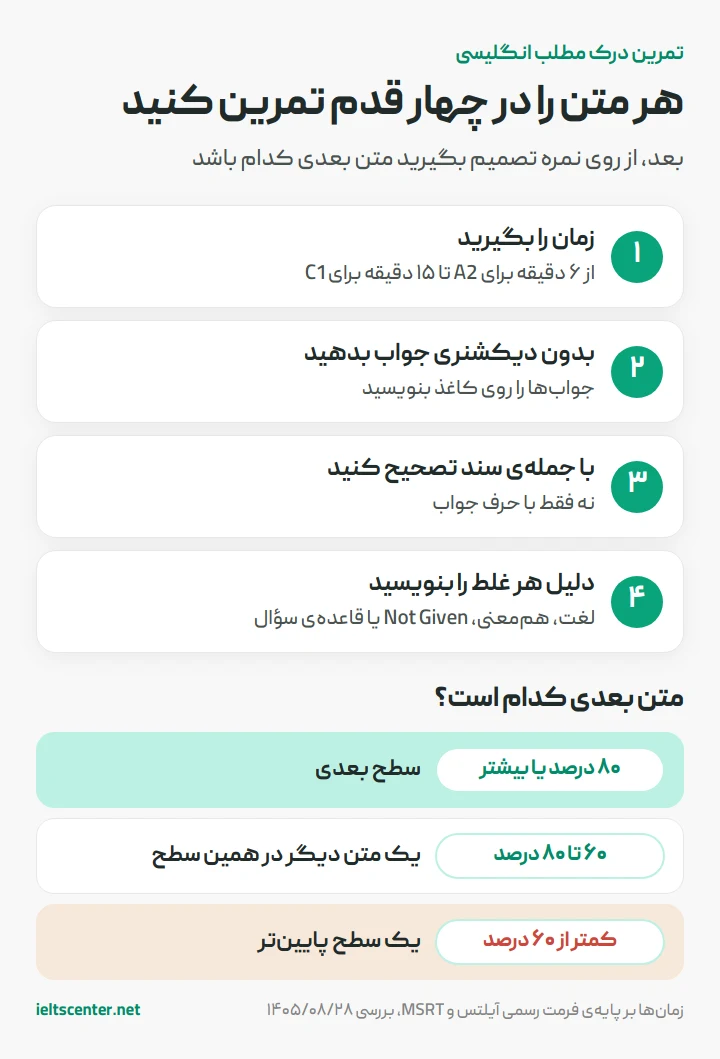
متن ۱، سطح A2: نامهی مینا دربارهی کار تازهاش
متنهای سطح A2 کوتاهاند و موضوعشان بیشتر کار، خانه و برنامهی روزانه است. سؤالها جواب صریح دارند، ولی همان کلمهی متن را تکرار نمیکنند. در سؤال ۳ مثلاً «on foot» آمده و متن نوشته است «I walk there». زمان: ۶ دقیقه.
Hi Sara,
I started my new job at Green Leaf Bakery on Monday. I work from 6 in the morning until 1 in the afternoon, five days a week. I don’t work on Fridays or Saturdays. The work is hard because I stand all day, but my boss, Mr Tavakoli, is very kind. On my first day, he showed me how to make bread. Now I make the bread every morning, and Nina, the other worker, makes the cakes.
The bakery is near the river, so I walk there. It takes twenty minutes. In the afternoon I’m tired, but I go to my English class at 4 o’clock on Sundays and Tuesdays.
Can you come to the bakery next week? The chocolate cake is very good!
Love,
Mina
سؤالهای متن ۱
- What time does Mina finish work? (a) 6 am (b) 1 pm (c) 4 pm
- Who makes the cakes? (a) Mina (b) Mr Tavakoli (c) Nina
- How does Mina get to work? (a) by bus (b) on foot (c) by car
- True or False: Mina works on Saturdays.
- True or False: Mina has English lessons twice a week.
- Why does Mina write to Sara? (a) to tell her about her new job (b) to ask for help with English (c) to sell her a cake
جوابهای متن ۱ و جملهی سند
| سؤال | جواب | کجای متن |
|---|---|---|
| ۱ | b | «until 1 in the afternoon» |
| ۲ | c | «Nina, the other worker, makes the cakes» |
| ۳ | b | «I walk there»؛ on foot یعنی پیاده |
| ۴ | False | «I don’t work on Fridays or Saturdays» |
| ۵ | True | «on Sundays and Tuesdays»، یعنی دو روز در هفته |
| ۶ | a | بیشتر نامه دربارهی کار تازه است؛ دعوت آخر نامه هدف اصلی نیست |
سؤال ۶ تنها سؤالی است که جوابش در یک جمله نیست. باید کل نامه را در نظر بگیرید. گزینهی c کلمهی cake را از متن برداشته تا شما را به اشتباه بیندازد؛ این دام در همهی سطحها تکرار میشود.
ترجمهی نامهی مینا
ترجمه را بعد از جوابدادن بخوانید، نه قبلش: سلام سارا، دوشنبه کار تازهام را در نانوایی «برگ سبز» شروع کردم. پنج روز در هفته، از ۶ صبح تا ۱ بعدازظهر کار میکنم. جمعهها و شنبهها کار نمیکنم. کار سخت است چون تمام روز سرپا هستم، ولی رئیسم آقای توکلی خیلی مهربان است. روز اول نشانم داد نان را چطور بپزم. حالا هر صبح من نان میپزم و نینا، همکار دیگرم، کیکها را درست میکند.
نانوایی نزدیک رودخانه است و پیاده میروم؛ بیست دقیقه راه است. بعدازظهرها خستهام، ولی یکشنبهها و سهشنبهها ساعت ۴ کلاس انگلیسی میروم. هفتهی بعد میتوانی به نانوایی بیایی؟ کیک شکلاتیاش خیلی خوب است! قربانت، مینا.
متن ۲، سطح B1: کتابخانهای که تا نیمهشب باز است
در سطح B1 متن بلندتر میشود و نظر آدمها هم وارد آن میشود، نه فقط واقعیتها. اینجا اولین بار با سؤال True/False/Not Given روبهرو میشوید که در آیلتس هم میآید. زمان: ۸ دقیقه.
A Night at the Library
When the public library in Westford started opening until midnight last year, many people thought it was a strange idea. Who would want to read books at eleven o’clock at night? But the library’s manager, Helen Ward, had noticed something. Every evening at eight, when the doors closed, a group of students waited outside, using the free Wi-Fi on their phones.
‘They didn’t have a quiet place to study at home,’ she says. ‘Some of them shared a room with two or three brothers and sisters.’
The library now stays open until midnight from Sunday to Thursday. Two extra members of staff work in the evening, and the money for them comes from local businesses, not from the city. At first, only about twenty people came after eight o’clock. Now the number is closer to a hundred on most nights, and before exams there are sometimes not enough chairs.
Not everyone is happy. Some neighbours say the street is noisier late at night, and the library has asked visitors to leave quietly. Helen also admits that the late hours are hard for her staff.
Still, she has no plans to change the timetable. ‘A library is not just a building full of books,’ she says. ‘It’s a place where people can do the things they can’t do anywhere else.’
سؤالهای متن ۲
برای سؤال ۱ تا ۴ بنویسید True اگر متن همین را میگوید، False اگر متن خلاف آن را میگوید، و Not Given اگر متن دربارهاش چیزی نگفته است.
- Everyone liked the idea of opening late from the start.
- Before the change, the library closed at 8 pm.
- The city pays for the evening staff.
- Most of the late-night visitors are university students.
- Why did Helen Ward decide to open late? (A) Local businesses asked her to. (B) She saw students who needed a place to study. (C) The neighbours wanted a quieter street.
- Write ONE NUMBER: How many people came after eight o’clock when the late opening began?
جوابهای متن ۲ و جملهی سند
| سؤال | جواب | کجای متن |
|---|---|---|
| ۱ | False | «many people thought it was a strange idea» |
| ۲ | True | «Every evening at eight, when the doors closed» |
| ۳ | False | «comes from local businesses, not from the city» |
| ۴ | Not Given | متن از students حرف میزند، ولی نه از دانشگاه و نه از «بیشتر» آنها |
| ۵ | B | «They didn’t have a quiet place to study at home» |
| ۶ | 20 | «At first, only about twenty people came after eight o’clock» |
چرا جواب سؤال ۴ False نیست؟
بیشتر جوابهای غلط این متن در سؤال ۴ است. False یعنی متن جملهای دارد که با سؤال تناقض دارد، مثلاً اگر نوشته بود «most visitors are not students». اینجا متن فقط گفته که گروهی دانشآموز یا دانشجو پشت در منتظر بودند. نگفته دانشجوی دانشگاهاند، و دربارهی سهمشان از صد نفر امروز هم چیزی ننوشته است. وقتی در متن جملهای پیدا نمیکنید که جملهی سؤال را تأیید یا رد کند، جواب Not Given است، حتی اگر جمله به نظرتان منطقی برسد.
متن ۳، سطح B2: «اتوبوس پیاده» یک مدرسه (سبک MHLE و MSRT)
بخش درک مطلب MHLE به گفتهی راهنمای رسمی آزمون در ۱۴۰۵ چهار متن حدود ۲۰۰ تا ۳۰۰ کلمهای در حوزهی بهداشت و سلامت دارد و برای هر متن پنج سؤال. متن زیر همین اندازه را دارد و موضوعش هم به سلامت نزدیک است. پنج سؤالش پنج نوعی است که در چهارگزینهایهای درک مطلب زیاد میبینید: ایدهی اصلی، جزئیات، معنی کلمه، استنباط و مرجع ضمیر. زمان: ۷ دقیقه.
The Walking Bus
Five years ago, fewer than one in five children at Ashford Primary School walked to school. Most were driven, even though the majority lived less than a mile away. Parents gave the same reasons again and again: the roads were busy, the mornings were rushed, and they did not feel safe letting young children walk alone.
The school’s answer was a ‘walking bus’. Instead of a vehicle, the bus is a group of children who walk to school together along a fixed route, led by two adult volunteers. Like a real bus, it has stops and a timetable: a child who lives on the route simply waits at the nearest stop and joins the group as it passes.
The scheme began with one route and eleven children. Today there are four routes, and around a third of pupils use them on a typical day. Teachers report that children who arrive on foot are more settled in the first lesson, although the school admits it has not measured this formally. The head teacher, Mr Okafor, is careful not to claim too much. ‘We can’t say it has made the children healthier,’ he says. ‘What we can say is that there are fewer cars outside the gate at half past eight, and that the children enjoy it.’
The biggest difficulty has nothing to do with the children. Volunteers are hard to keep, especially in winter, and twice last year a route had to be cancelled because no adult was available. The school is now asking pupils’ grandparents to take part, an idea that has already filled one gap in the timetable.
سؤالهای متن ۳
- What is the passage mainly about? (A) why parents prefer to drive their children (B) a school scheme that changed how children travel, and its problems (C) evidence that walking makes children healthier (D) the cost of school transport
- According to the first paragraph, why did most parents drive their children? (A) The school was far from their homes. (B) They were worried about safety and short of time. (C) The children refused to walk. (D) There was no school bus.
- The word “settled” in paragraph 3 is closest in meaning to (A) calm and ready (B) tired (C) late (D) excited
- What does Mr Okafor’s comment suggest? (A) He is sure the scheme has improved health. (B) He does not want to claim results that have not been proven. (C) He plans to end the scheme. (D) Parents have complained about the cars.
- The phrase “an idea” in the last sentence refers to (A) cancelling a route (B) walking in winter (C) asking grandparents to help (D) adding a fifth route
جوابهای متن ۳ و جملهی سند
| سؤال | جواب | نوع سؤال | کجای متن |
|---|---|---|---|
| ۱ | B | ایدهی اصلی | پاراگراف ۲ و ۳ طرح را شرح میدهند و پاراگراف ۴ مشکلش را |
| ۲ | B | جزئیات | «they did not feel safe» و «the mornings were rushed» |
| ۳ | A | معنی کلمه | کنار «in the first lesson» آمده، یعنی آرام و آمادهی درس |
| ۴ | B | استنباط | «is careful not to claim too much» و «We can’t say it has made the children healthier» |
| ۵ | C | مرجع | «asking pupils’ grandparents to take part, an idea that…» |
گزینهی C در سؤال ۱ دام اصلی این متن است. متن دربارهی سلامت حرف میزند، ولی مدیر مدرسه صریحاً گفته نمیتواند ادعا کند بچهها سالمتر شدهاند. در آزمونهای چهارگزینهای داخلی گزینهای که از متن «بیشتر» ادعا میکند، معمولاً غلط است. پرسشهای متداول آزمون MSRT هم نوشته است که «تمامی رفرنسهای آزمون msrt رفرنسهای ازمون تافل» است. برای تمرین بیشتر MSRT، بخش درک مطلب کتابهای آمادگی تافل به کارتان میآید.
متن ۴، سطح C1: تعمیر بهجای خرید (سبک ریدینگ آیلتس آکادمیک)
ریدینگ آیلتس آکادمیک طبق صفحهی فرمت رسمی آیلتس ۶۰ دقیقه، ۴۰ سؤال و سه بخش دارد و مجموع متنهایش ۲۱۵۰ تا ۲۷۵۰ کلمه است. متن زیر کوتاهتر از یک بخش واقعی است، ولی سه نوع سؤال پرتکرار آیلتس را دارد. پاراگرافها با حرف A تا E مشخص شدهاند. زمان: ۱۵ دقیقه.
Fixing Instead of Replacing
A For most of the twentieth century, repairing broken household objects was simply part of ordinary life. Shoes were resoled, radios were taken to a local repairer, and clothes were mended at home. By the end of the century, however, this habit had largely disappeared in wealthy countries. Falling prices for new goods meant that replacing an item was often cheaper than paying for the hours needed to fix it.
B Manufacturers contributed to the change. Many modern devices are assembled with glue rather than screws, which makes them lighter and thinner but also difficult to open without damage. Spare parts, where they exist at all, may be sold only to approved service centres, and repair manuals are frequently treated as confidential. For an independent repairer, a simple fault can therefore become an expensive problem.
C More recently, a counter-movement has emerged. Volunteer-run ‘repair cafés’, where people bring broken items and fix them with the help of experienced volunteers, now operate in many cities. Their organisers are generally modest about their impact on waste. What they emphasise instead is knowledge: visitors leave not only with a working toaster but with an understanding of how it works.
D Governments have begun to take an interest as well, and some have introduced rules that require manufacturers to keep spare parts available for a fixed period. Critics argue that such rules may raise prices, since the cost of storing parts will be passed on to consumers. Supporters reply that a more expensive product which lasts twice as long is, in the end, the cheaper option.
E Whether repair can return as a normal habit remains uncertain. Convenience is a powerful force, and few people want to spend a Saturday morning taking a vacuum cleaner apart. Yet the growing interest suggests that, for a significant minority at least, the question of what happens to things after they break has become one worth asking.
سؤالهای متن ۴
سؤال ۱ تا ۵: برای هر پاراگراف یک تیتر از فهرست i تا vi انتخاب کنید. یکی از تیترها اضافه است.
- i. Why new products are hard to repair
- ii. A debate about the cost of repair rules
- iii. A habit that faded as goods became cheaper
- iv. Learning, not only fixing
- v. The end of the repair industry
- vi. An uncertain future
- Paragraph A
- Paragraph B
- Paragraph C
- Paragraph D
- Paragraph E
سؤال ۶ تا ۸: آیا این جملهها با نظر نویسنده میخواند؟ Yes، No یا Not Given بنویسید.
- Low prices for new goods were one reason people stopped repairing things.
- Repair cafés have greatly reduced the amount of waste in cities.
- Most people will soon go back to repairing their belongings.
سؤال ۹ و ۱۰: جملهها را با حداکثر دو کلمه از متن کامل کنید (NO MORE THAN TWO WORDS).
- Many modern devices are held together with ______ instead of screws.
- Critics say that the cost of ______ will be passed on to consumers.
جوابهای متن ۴ و جملهی سند
| سؤال | جواب | کجای متن |
|---|---|---|
| ۱ | iii | «this habit had largely disappeared» و «Falling prices for new goods» |
| ۲ | i | چسب بهجای پیچ، قطعهی یدکی و دفترچهی تعمیر محرمانه |
| ۳ | iv | «What they emphasise instead is knowledge» |
| ۴ | ii | بحث Critics و Supporters دربارهی قیمت |
| ۵ | vi | «remains uncertain» |
| ۶ | Yes | «Falling prices for new goods meant that replacing an item was often cheaper» |
| ۷ | Not Given | نویسنده فقط میگوید برگزارکنندهها دربارهی اثرشان بر زباله فروتناند؛ نه کاهش را تأیید میکند نه رد |
| ۸ | No | «remains uncertain» و «for a significant minority at least» |
| ۹ | glue | «assembled with glue rather than screws» |
| ۱۰ | storing parts | «the cost of storing parts will be passed on to consumers» |
تیتر v دام این تمرین است. پاراگراف A و B از افت تعمیر حرف میزنند، ولی هیچجا نمیگویند صنعت تعمیر تمام شده است. در سؤال ۷ هم کسی که «modest» را «کم» معنی کند، جواب No میدهد. نویسنده نگفته اثر کافهها کم است؛ گفته برگزارکنندهها ادعای بزرگی نمیکنند. در سؤال ۱۰ هم «storing spare parts» سه کلمه است و نمره نمیگیرد.
لغتهای متن ۳ و ۴ که معنیشان در متن فرق میکند
این کلمهها را بیشتر زبانآموزها با معنی اول دیکشنری میشناسند و همین باعث جواب غلط میشود. معنی را از جملهی متن بگیرید.
| کلمه | معنی رایج | معنی در این متن |
|---|---|---|
| settled | ساکنشده | آرام و آماده (متن ۳) |
| scheme | نقشه، توطئه | طرح یا برنامه (متن ۳) |
| modest | فروتن | کمادعا دربارهی نتیجه (متن ۴) |
| assembled | جمع شدن آدمها در یک جا | سرهمشده، مونتاژشده (متن ۴) |
| emerged | بیرون آمدن از آب یا جای پنهان | پیدا شد، به وجود آمد (متن ۴) |
| passed on to | رد کردن، منتقل کردن | به گردن کسی انداختن هزینه (متن ۴) |
اگر از ده سؤال این متن هشت یا بیشتر را درست زدید، وقت آن رسیده که یک ریدینگ کامل آیلتس را با زمان واقعی امتحان کنید. متنهای سهبخشی با پاسخنامه را در نمونه سوالات ریدینگ آیلتس با جواب گذاشتهایم. تعداد جواب درست یک آزمون کامل را هم ماشینحساب نمرهی آیلتس به باند تبدیل میکند. طبق جدول نمرهدهی ielts.org، در ریدینگ آکادمیک بهطور میانگین ۲۳ جواب درست از ۴۰ باند ۶ است و ۳۰ جواب درست باند ۷.
زمان تمرین را با آزمون خودتان تنظیم کنید
هر آزمون برای هر سؤال درک مطلب وقت متفاوتی میدهد. اگر برای MSRT تمرین میکنید و با سرعت آیلتس میخوانید، سر جلسه کم میآورید. نمودار زیر وقت هر سؤال را از تقسیم زمان بخش ریدینگ بر تعداد سؤالهایش حساب کرده است.
عددهای نمودار از جدول زیر آمده است. هر ردیف را از صفحهی رسمی برگزارکننده برداشتهایم و ۲۸ آبان ۱۴۰۵ دوباره بررسی کردهایم. تولیمو کمترین وقت را میدهد. اطلاعیهی سازمان سنجش برای دورههای ۲۳۲ تا ۲۴۳ (سال ۱۴۰۴) برای ۳۵ سؤال درک مطلب ۴۰ دقیقه وقت گذاشته است.
| آزمون | سؤال درک مطلب | زمان | متنها |
|---|---|---|---|
| IELTS Academic | ۴۰ | ۶۰ دقیقه | سه بخش، جمعاً ۲۱۵۰ تا ۲۷۵۰ کلمه |
| IELTS General Training | ۴۰ | ۶۰ دقیقه | سه بخش، جمعاً ۲۱۵۰ تا ۲۳۷۵ کلمه |
| MSRT | ۴۰ | ۵۵ دقیقه | اعلام نشده؛ منابع آزمون همان منابع تافل است |
| تولیمو | ۳۵ | ۴۰ دقیقه | اعلام نشده |
| MHLE | ۲۰ | ۲۵ دقیقه (پیشنهادی) | چهار متن ۲۰۰ تا ۳۰۰ کلمهای در حوزهی سلامت |
| B1 Preliminary | ۳۲ | ۴۵ دقیقه | شش بخش |
| B2 First | ۵۲ (همراه Use of English) | ۷۵ دقیقه | جمعاً ۲۲۰۰ تا ۲۵۰۰ کلمه |
منبع ردیفها: صفحههای فرمت آیلتس جنرال، B1 Preliminary و B2 First و صفحههایی که بالاتر پیوندشان آمد. EPT دانشگاه آزاد را در جدول نیاوردهایم، چون تعداد سؤال درک مطلب و زمانش در صفحهی رسمی آزمون اعلام نشده است. حد نصاب و ثبتنام این آزمونها را در آزمون MSRT، آزمون تولیمو و آزمون MHLE نوشتهایم.
بعد از تصحیح: جوابهای غلط را دستهبندی کنید
تعداد جواب درست فقط نشان میدهد کجای کار هستید. چیزی که نمره را بالا میبرد این است که بدانید چرا غلط زدید. کنار هر جواب غلط یکی از این چهار دلیل را بنویسید:
- کلمه را نمیدانستم. اینها را در دفتر لغت بنویسید، با همان جملهی متن.
- کلمه را میدانستم، ولی هممعنیاش را در سؤال نشناختم؛ مثل «I walk there» و «on foot» در متن ۱.
- False و Not Given را قاطی کردم، مثل سؤال ۴ متن ۲.
- جواب را درست فهمیدم، ولی قاعدهی سؤال را رعایت نکردم؛ مثلاً سه کلمه نوشتم وقتی دو کلمه خواسته بود.
بعد از پنج یا شش متن، یکی از این چهار ستون از بقیه پرتر است و تمرین بعدیتان همان است. اگر ستون اول پر است، مشکل شما بیشتر لغت است تا مهارت خواندن؛ روش مرور لغت را در چگونه کلمات زبان را حفظ کنیم ببینید. اگر ستون دوم و سوم پر است، سراغ تکنیکهای ریدینگ آیلتس بروید. اگر وقت کم میآورید، مدیریت زمان در ریدینگ آیلتس را بخوانید.
قدم بعد از این چهار متن درک مطلب
اگر هر چهار متن را در وقتش و با دستکم ۸۰ درصد جواب درست تمام کردید، پایهی لازم را دارید. از این به بعد سراغ متنهای کامل آزمون هدفتان بروید و هر هفته دستکم یک آزمون کامل را با زمان واقعی بزنید. نمرهی ریدینگ آیلتس چطور حساب میشود را در نمرهدهی ریدینگ آیلتس توضیح دادهایم.
اگر از متن ۱ یا ۲ جلوتر نرفتید، مشکل معمولاً پایهی زبان است و تمرین ریدینگ بهتنهایی کافی نیست. سطح دقیق خودتان را با آزمون تعیین سطح رایگان نسل فردا پیدا کنید. نتیجه نشان میدهد از کدام دوره شروع کنید. بعد از چند هفته کلاس، دوباره به متن ۲ و ۳ همین صفحه برگردید و نمره را با بار اول مقایسه کنید.
منابع
منابع رسمیای که این مقاله با آنها نوشته یا بازبینی شده است:
- IELTS Academic: Reading test format، IELTS (ielts.org)
- IELTS General Training: Reading test format، IELTS (ielts.org)
- IELTS scoring in detail، IELTS (ielts.org)
- پرسش و پاسخهای متداول آزمون زبان MSRT، سازمان امور دانشجویان، وزارت علوم
- اطلاعیهی آزمون زبان انگلیسی پیشرفته (تولیمو)، دورههای ۲۳۲ تا ۲۴۳ سال ۱۴۰۴، سازمان سنجش آموزش کشور
- راهنمای برگزاری آزمونهای MHLE در سال ۱۴۰۵، مرکز سنجش آموزش پزشکی، وزارت بهداشت
- B1 Preliminary: exam format، Cambridge University Press & Assessment
- B2 First: exam format، Cambridge University Press & Assessment
آخرین بررسی پیوندها: ۲۸ آبان ۱۴۰۵